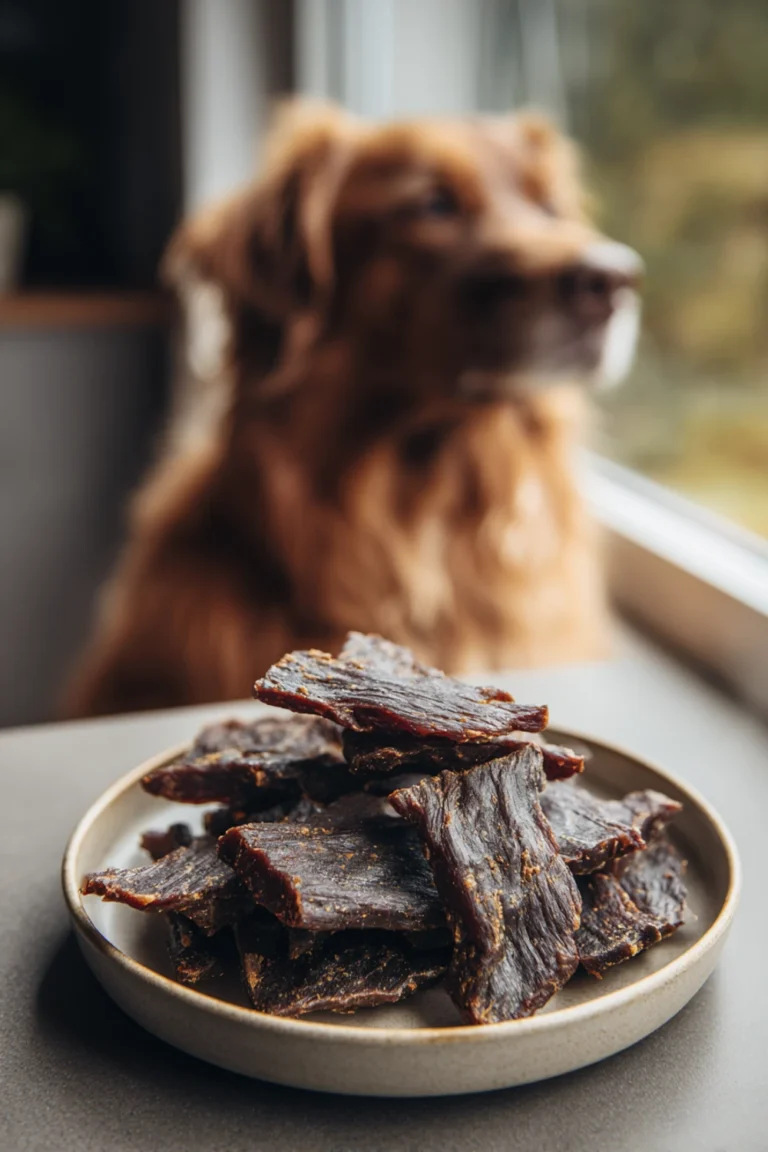
Easy homemade dog jerky recipe beef for pets
The first time I tried making homemade dog jerky, I was convinced my dog, Max, would lose his mind over it. I mean, beef? His favorite? How could I go wrong? Well, let’s just say my first batch came out more like beef-flavored cardboard. Max took one sniff, gave me the side-eye, and walked away. Lesson learned: thickness matters. Now, after years of trial and error (and a few more rejected batches), I’ve finally nailed a recipe that makes him drool on command. If you’ve got a pup who loves treats, this one’s worth the effort—just don’t make my mistakes!
Recipe Card
| Recipe Title | Easy homemade dog jerky recipe beef for pets |
|---|---|
| Servings | About 30–40 small strips |
| Prep Time | 15 minutes |
| Cooking Time | 3–4 hours (dehydrator) or 2–3 hours (oven) |
| Calories | ~25 per strip (varies by size) |
Ingredients
- 1 lb lean beef (like flank steak or round steak)—fat trimmed
- 1/2 cup low-sodium beef broth (no onions or garlic!)
- 1 tbsp coconut oil (optional, but great for coat health)
That beef broth? Yeah, I learned the hard way to check labels. Once grabbed a “low-sodium” one that had onion powder hidden in the ingredients. Max didn’t get sick, thank goodness, but I panicked and called the vet. Now I triple-check everything. Coconut oil was a game-changer—Max’s coat got shinier, and he licks his lips like it’s dessert.
Directions
- Slice the beef into 1/4-inch strips—against the grain for easier chewing.
- Simmer beef broth and coconut oil (if using) in a pan just until mixed. Let it cool.
- Toss beef strips in the broth mix, coating evenly.
- Lay strips on dehydrator trays or a baking sheet (with parchment) without overlapping.
- Dehydrate at 160°F for 3–4 hours or bake at 200°F for 2–3 hours, flipping halfway.
- Let cool completely before serving. Store in an airtight container for up to 2 weeks.
That “slice against the grain” tip? Ignored it once. Max spent 10 minutes gnawing on one strip like it was a chew toy. Now I cut thinner and against the grain—way easier on his teeth. Also, don’t skip the flipping step! I forgot once and ended up with jerky that was crispy on one side and rubbery on the other. Max still ate it, but he looked disappointed.
This recipe’s become my go-to for road trips. Max gets car anxiety, but a piece of this jerky keeps him calm(ish). It’s also way cheaper than store-bought, and I know exactly what’s in it—no mystery “dog flavoring” here. The only downside? My kitchen smells like a steakhouse for hours, and now my neighbor’s dog stares at me through the fence.
Next time, I’d try adding a sprinkle of turmeric (anti-inflammatory!) or parsley (fresh breath!). Max isn’t picky, but I like mixing it up. Just avoid anything fancy—simple is safer when it comes to homemade dog treats.
Nutrition Info (per serving)
| Calories | Carbs | Fat | Protein |
|---|---|---|---|
| ~25 | 0g | 1g | 4g |
I was shocked how protein-packed these are! Great for active dogs, but if your pup’s on a diet, go easy—Max once scarfed down half a batch and then zoomed around the yard for an hour. For sensitive tummies, skip the coconut oil or use less broth. My friend’s dog has a beef allergy, so she uses turkey instead (same method, just shorter drying time).
Ingredient Swaps
| Ingredient | Substitution |
|---|---|
| Beef | Turkey, chicken, or venison |
| Beef broth | Water or bone broth (pet-safe) |
| Coconut oil | Olive oil (tiny amount) |
Turkey jerky was a hit with Max, but chicken dried way faster—almost burned a batch. Venison’s his favorite (thanks, hunting buddy uncle), but it’s pricier. Water works fine if you’re out of broth, but the flavor’s blander. Max still eats it, but he’s less excited. Olive oil’s fine in a pinch, but coconut oil’s better for their skin.
Tips
- Freeze the beef for 20 minutes before slicing—makes it way easier to cut thin.
- Pat strips dry before dehydrating to speed up the process.
- Test for doneness by bending a strip—it should crack, not snap.
- If using an oven, prop the door open with a wooden spoon to let moisture escape.
That freezer trick? Learned it after hacking at room-temp beef like a horror movie extra. Patting dry is key too—my first batch took forever because I didn’t. And that “crack not snap” test? Total lifesaver. I used to over-dry them into little beef sticks. Max would still eat them, but I swear he sighed.
FAQ
Can I use ground beef?
Tried it once—big mistake. It crumbled everywhere, and the texture was weird. Max ate it, but it looked more like beef gravel than jerky. Stick to whole cuts.
How do I know it’s safe from bacteria?
Dehydrating at 160°F kills nasties, but if you’re nervous (like I was), bake it first at 200°F for 10 minutes. I did this for months until my vet said it wasn’t necessary. Now I just trust the dehydrator.
My dog’s a chewer. Should I make thicker strips?
Depends on your dog! My buddy’s Lab loves thick chunks, but Max’s a dainty chewer. Start thin—you can always go thicker next time. Just adjust drying time (longer for thicker pieces).
That’s everything I know about making Easy homemade dog jerky recipe beef for pets for Max! Give it a shot, and if your dog’s anything like mine, you’ll have a new best friend (at least until the jerky runs out). Happy cooking!
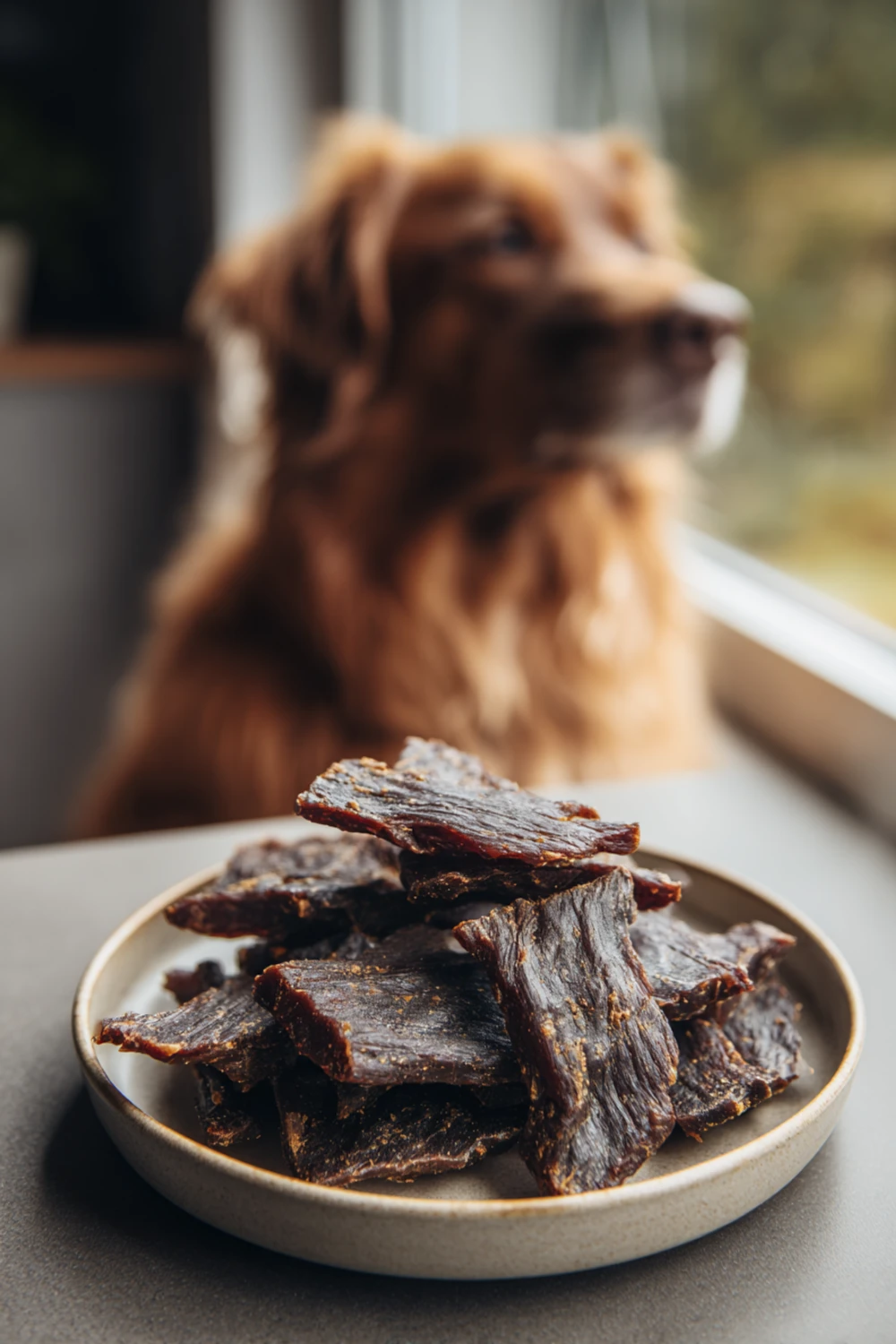
Easy homemade dog jerky recipe beef for pets
A simple and safe homemade beef jerky recipe for dogs, made with lean beef and pet-safe ingredients.
Ingredients
- 1 lb lean beef (like flank steak or round steak)—fat trimmed
- 1/2 cup low-sodium beef broth (no onions or garlic!)
- 1 tbsp coconut oil (optional, but great for coat health)
Instructions
-
Slice the beef into 1/4-inch strips—against the grain for easier chewing.
-
Simmer beef broth and coconut oil (if using) in a pan just until mixed. Let it cool.
-
Toss beef strips in the broth mix, coating evenly.
-
Lay strips on dehydrator trays or a baking sheet (with parchment) without overlapping.
-
Dehydrate at 160°F for 3–4 hours or bake at 200°F for 2–3 hours, flipping halfway.
-
Let cool completely before serving. Store in an airtight container for up to 2 weeks.
Nutrition (Per Serving)